
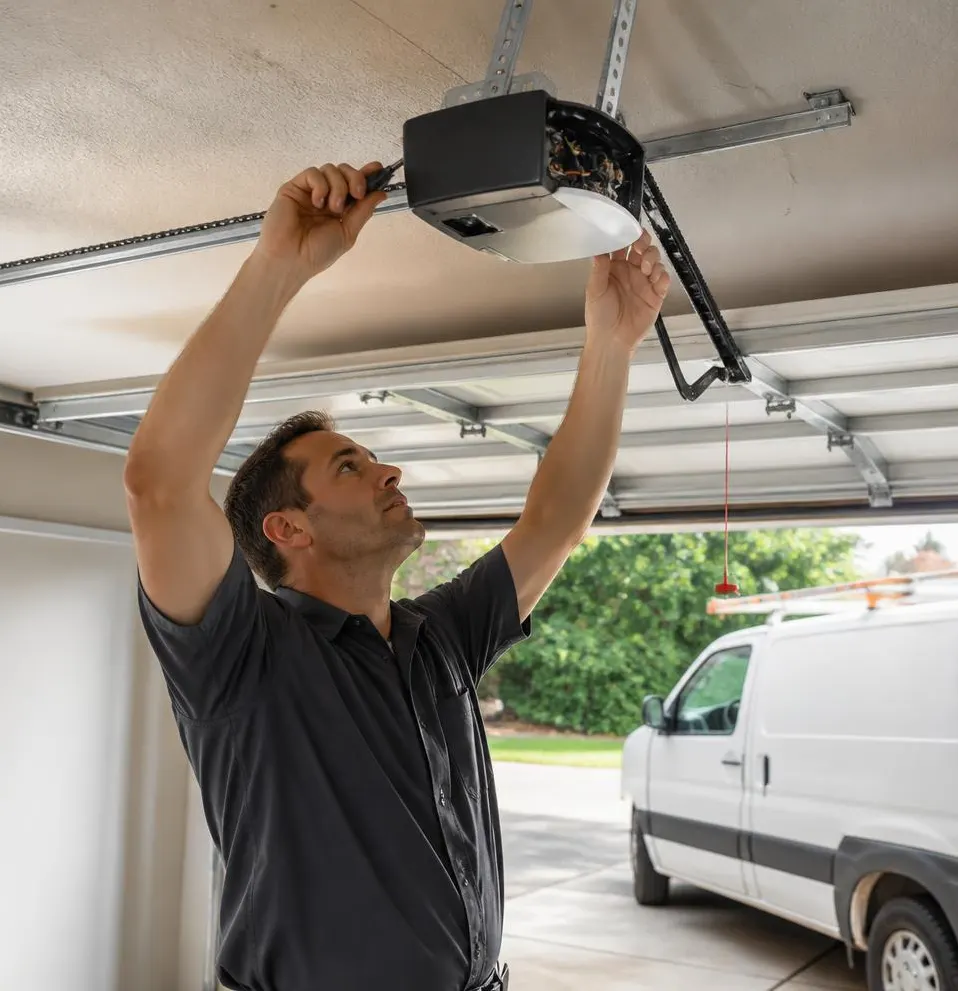
What a Technician Sees After a Windstorm Call
The call usually comes in a day or two after a storm passes. A homeowner says the door "just popped off the tracks" or that one panel is bowed in like someone pushed on it from outside. On inspection, it's almost always the same story: thin, unreinforced panels, rollers that were already worn before the wind ever hit, and tracks held on with hardware that's been quietly rusting from salt air for years. The storm didn't cause the weakness — it just found it.
This is the pattern worth understanding before the next system forms in the Gulf, not after.
Why the Garage Door Is the Weakest Wall in the House
A garage door is the largest moving opening on most homes, and it's built to glide up and down, not to resist a wall of wind pressure. When high wind hits a house, pressure builds on the windward side and tries to find a way in. If the garage door fails first — buckles, blows in, or gets ripped off its tracks — that pressure suddenly has nowhere to go but up, pushing against the roof decking and trusses from the inside. That's how a failed garage door turns into roof damage or worse. The door isn't just a door during a hurricane; it's structural.
Signs Your Door Is More Vulnerable Than It Looks
- Single-layer steel panels that flex when you press on them with your hand.
- No horizontal bracing on the inside of the panels (older doors especially).
- Worn or bent rollers that no longer sit flush in the track.
- Rusted track brackets or lag screws, common near the coast where salt air accelerates corrosion.
- Gaps around the door where weatherstripping has shrunk, cracked, or swollen unevenly from humidity.
Any one of these on its own might just mean a noisy door. Combined, they mean a door that's more likely to give way under wind load.
Getting Ready Before a Storm Watch Is Issued
Waiting until a storm is forecast to think about your garage door means you're working against the clock and against every supply shelf in the region. The better approach is a seasonal check now, while the weather is calm, so you're not scrambling later.
- Test the rollers and track by hand. Open and close the door manually (with the opener disconnected) and watch for binding, grinding, or a roller that jumps the track even slightly.
- Check every hinge and bracket for rust or looseness. Salt-laden humidity works on hardware even when a door looks fine from a few feet away.
- Inspect the weatherstripping along the bottom and sides. Florida's humidity swings cause rubber and vinyl seals to swell, crack, or pull away from their channels, leaving gaps wind-driven rain can exploit.
- Know where the manual release is and make sure it works, in case you lose power and need to operate the door by hand.
- Confirm your opener has reliable backup power if you rely on it during outages, which are common once storms move through Gulf County.
- Clear the area around the track of anything that could block the door from fully seating, including debris that collects after afternoon downpours.
Reinforcement vs. Replacement: The Real Trade-Off
For many existing doors, a retrofit bracing kit — horizontal struts bolted to the inside of each panel, paired with reinforced track hardware — adds real wind resistance without replacing the whole door. These kits generally run in the low hundreds of dollars installed, as a national range, and are a reasonable option if the door itself is still structurally sound and just under-braced.
If the door is older, already showing rust at the hinges, or made of thin panel steel that flexes easily, bracing is putting a patch on a door that's nearing the end of its service life anyway. In that case, a wind-rated replacement door is the better long-term move. These doors are built with heavier gauge steel, reinforced end stiles, and track systems designed to handle sustained wind pressure, and they also tend to hold up better against the swelling and corrosion that coastal humidity causes over time. National price ranges for a full wind-rated garage door replacement vary widely by size and material, but it's worth getting a direct comparison between a bracing retrofit and full replacement before deciding, since the right call depends on the current condition of your specific door.
After the Storm Passes
Once conditions clear, walk the door again. Look for new gaps in the weatherstripping, water staining along the bottom panel, fresh rust spots where moisture got into hardware, or a track that's pulled slightly away from the wall. Small shifts in alignment after high wind are common and are much cheaper to fix before they turn into a stuck or off-track door during the next event.
When to Call Port St. Joe Garage Door Service
If your door flexes under hand pressure, if rollers or hardware show rust, or if the door came through a recent storm slightly off track, it's worth having it looked at before the next system develops. Our Garage Door Maintenance & Tune-Up service checks rollers, tracks, hinges, and weatherstripping and catches the small issues that turn into storm failures. If a door is already damaged, bent, or came off its track, our Off Track Door Repair and Garage Door Installation & Replacement services get it back to solid, reliable condition — or replaced with a door built for this coast's wind and humidity, if that's the smarter long-term fix.
Call Port St. Joe Garage Door Service today to get your garage door storm-ready before the next watch is issued across Gulf County.